
Cybersecurity & Managed IT
Wall of Cyber — Ethical IT & Cyber Defence
B2B cybersecurity web platform showcasing ethical IT management, vulnerability assessments, and threat mitigation services.
Flawless experiences on every device
In a world where most web traffic comes from mobile devices, a site that doesn't perform perfectly on smartphones is leaving money on the table. We design and develop fully responsive websites that adapt beautifully to any screen size — from the smallest phone to the largest desktop monitor — without compromising on speed, usability, or aesthetics.
Clear reasons to choose this work, based on what your business needs.
We design for mobile first, then scale up — ensuring the experience is optimal for the majority of your visitors.
Google prioritises mobile-friendly sites in search results. Responsive design is essential for strong SEO performance.
Optimised assets, lazy loading, and device-appropriate image sizes ensure fast load times on mobile networks.
Visitors who can navigate your site easily on their device are far more likely to stay, explore, and convert.
Your brand looks professional and polished whether viewed on a phone, tablet, laptop, or widescreen monitor.
Flexible grid systems and fluid layouts mean your site adapts smoothly to new devices and screen sizes as they emerge.
The exact scope is agreed in your written quote before work starts.
CSS Grid and Flexbox-based layouts that reflow gracefully across all viewport sizes without breakpoint hacks.
Tap targets, swipe gestures, and mobile-friendly navigation patterns designed specifically for touchscreen users.
Next-gen image formats (WebP, AVIF) and responsive srcset attributes serve the right image size for every device.
Intuitive hamburger menus, bottom navigation bars, and sticky headers keep mobile users oriented and engaged.
We set and enforce performance budgets to ensure mobile page load times stay within acceptable limits under real conditions.
Rigorous testing across 20+ real device and browser combinations to catch and fix any responsive design inconsistencies.
We target Google's Core Web Vitals metrics — LCP, FID, and CLS — for strong performance scores on mobile.
Base functionality works for all users, with enhanced features layered in for devices that can support them.
You see what is happening, what comes next and what needs your approval.
We test your existing site across devices, identify responsive design failures, and benchmark your current performance scores.
Designs start at mobile viewport and are progressively enhanced for larger screens, ensuring the best small-screen experience.
Clean, semantic HTML and CSS with fluid layouts and tested breakpoints are implemented across every page template.
We test across real devices and browsers, resolving every responsive issue before your site goes live.
B2B cybersecurity web platform showcasing ethical IT management, vulnerability assessments, and threat mitigation services.
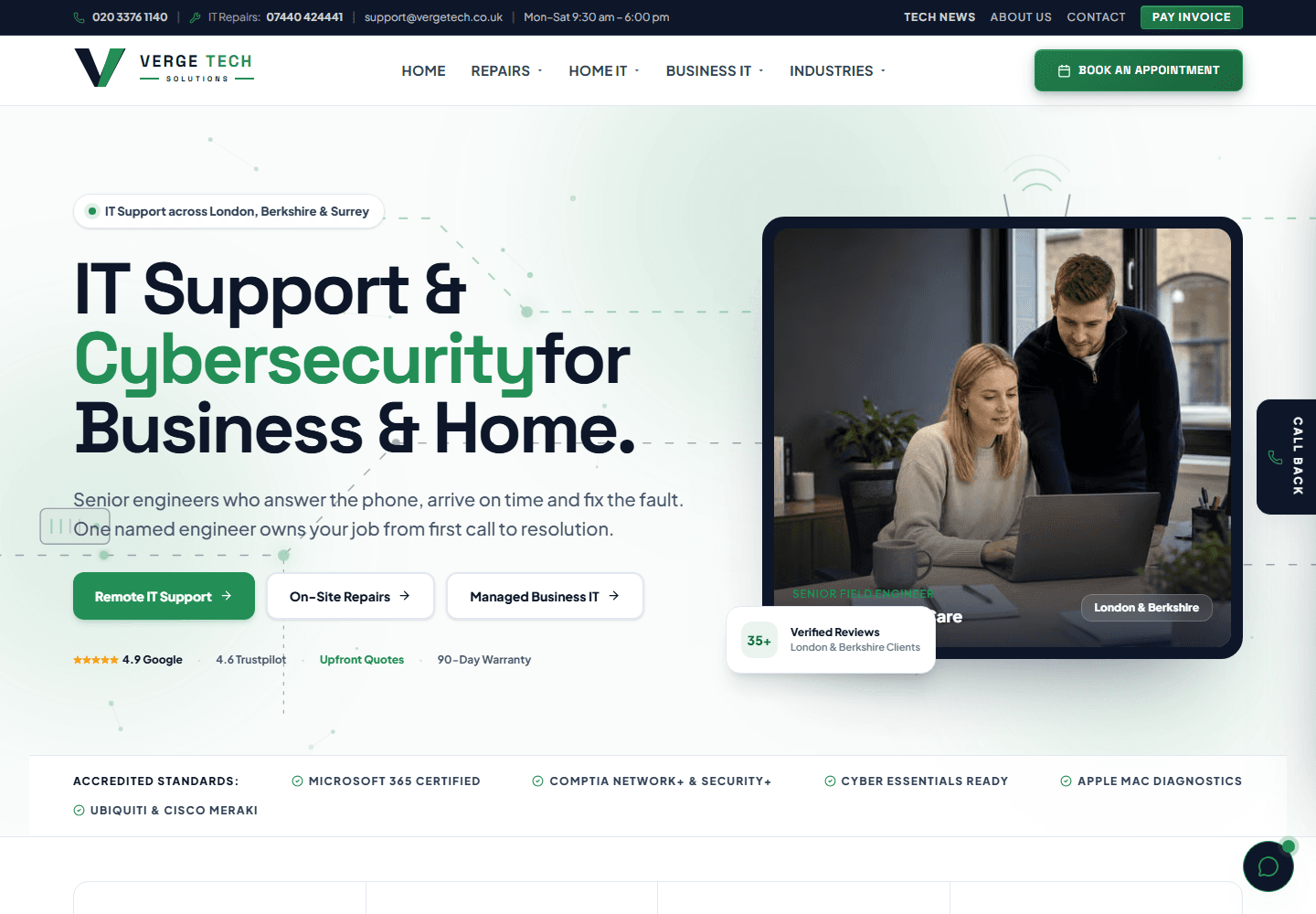
High-performance Next.js corporate website deployed to Cloudflare Pages edge network, featuring regional IT support silos across London, Berkshire, and Surrey.

Interactive portfolio and digital showcase for historical virtual reality simulations and educational heritage experiences.
Tell us what is not working, or what you would like to build. We will come back with honest advice and a fixed written quote.
Request a quote